
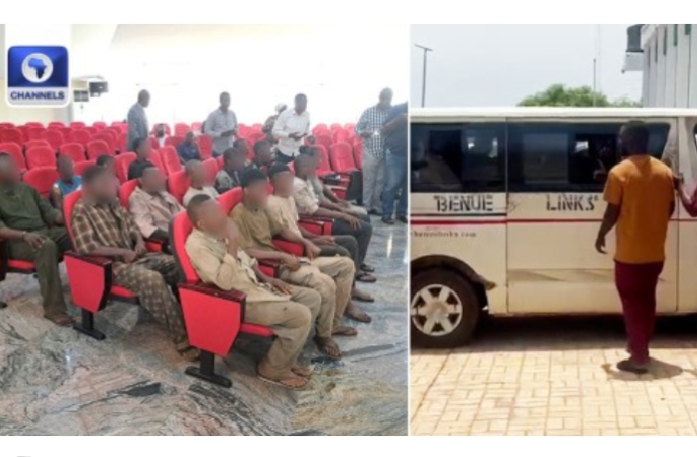
The Commissioner of Police in Benue State, Ifeanyi Emenari, disclosed this on Sunday while presenting 15 of the rescued victims to Governor Hyacinth Alia at the Government House in Makurdi. Emenari said the operation, carried out in collaboration with other security agencies, led to the successful recovery of all the victims. He also confirmed the arrest of seven suspects linked to the incident, describing it as a major breakthrough in the investigation. The suspects are currently in custody. The rescued victims are expected to receive medical attention as investigations continue. Governor Alia commended security operatives and community members for their role in the rescue. He also revealed that eight of the victims were candidates of the ongoing Unified Tertiary Matriculation Examination (UTME), who were travelling to Otukpo at the time of the attack. This disclosure contradicts earlier statements by both the police and the Joint Admissions and Matriculation Board (JAMB), which had indicated that no UTME candidates were among those abducted. Gunmen had intercepted the state-owned Benue Links bus last Wednesday along the Benue Burnt Bricks area in Otukpo Local Government Area, robbing passengers before taking several of them into the bush. Security operatives launched a coordinated search across nearby areas, leading to the rescue of some victims, while two others escaped from captivity. Police confirmed on Sunday morning that the remaining 13 victims had been freed, completing the rescue operation.
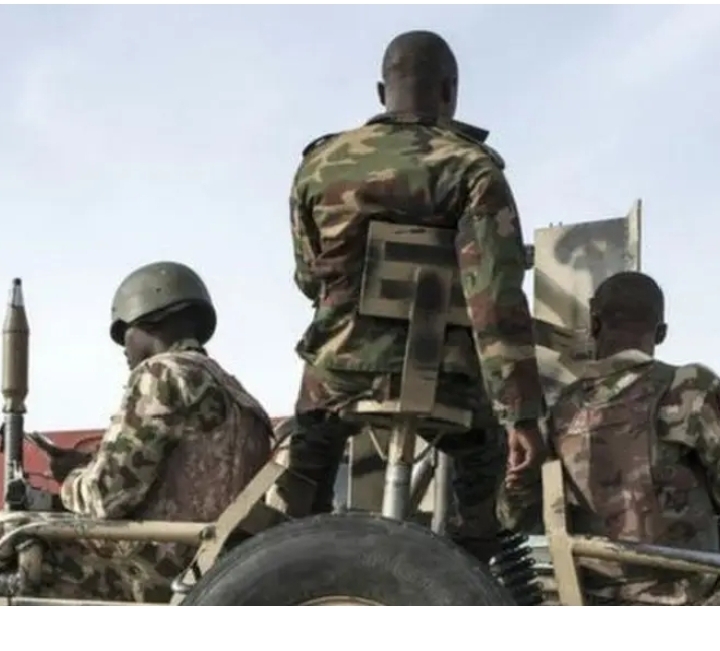
Army arrests over 20 suspected terrorists in nationwide operations
The Nigerian Army has arrested over 20 suspected terrorists and other criminals in coordinated nationwide operations carried out within the last 24 hours, as part of ongoing efforts to combat insurgency. According to an operational report released on Sunday at the Army Headquarters in Abuja, the arrests followed intelligence-led offensives conducted in collaboration with other security agencies and local vigilantes. The operations targeted terrorist hideouts, kidnapping syndicates, and criminal networks across several states. In Kogi State, troops of the 12 Brigade, working with the Nigerian Police and vigilantes, carried out operations in Kakuma Ileteju/Origa and Ijumu villages, leading to the arrest of two suspected terrorists. Two motorcycles and two chainsaws were also recovered. In Kaduna State, troops of Sector 1 Operation FANSAN YAMMA apprehended a suspect at Afaka, who reportedly confessed to fleeing a terrorist camp due to internal clashes among members. In Sokoto State, troops of the COAS Intervention Battalion VII, alongside 8 Division Nigerian Army Stalkers, cleared multiple villages in Tangaza Local Government Area, destroying a terrorist camp and recovering camouflage trousers. Operations in Niger State led to the rescue of a Nigerien national who had been held captive for over three weeks. Troops also disposed of an improvised explosive device (IED), arrested five suspects, and dismantled terrorist camps and illegal mining sites. In Kwara State, troops responded to a distress call, forcing kidnappers to abandon three victims. Similarly, in Edo State, troops rescued victims, arrested five suspected kidnappers, and recovered an AK-47 rifle, ammunition, and mobile phones. In Delta State, a suspected IPOB member was arrested at Umunede Junction. In the South-South region, troops of the 2 Brigade raided drug hideouts in Akwa Ibom State, arresting six suspects and recovering various illicit substances, including cannabis, methamphetamine, codeine, and tramadol, along with cash. In Rivers State, troops dismantled illegal oil bunkering infrastructure, recovering pipes, hoses, drum ovens, receivers, and other equipment used in refining activities. In Plateau State, troops of Operation ENDURING PEACE intercepted criminal elements, arresting nine suspects and recovering firearms, ammunition, motorcycles, mobile phones, and cash. In Abia State, troops discovered sacks of suspected stolen crude oil concealed along the Imo River axis in line with operational directives.
Electricity in Nigeria Progress or Political Spin?
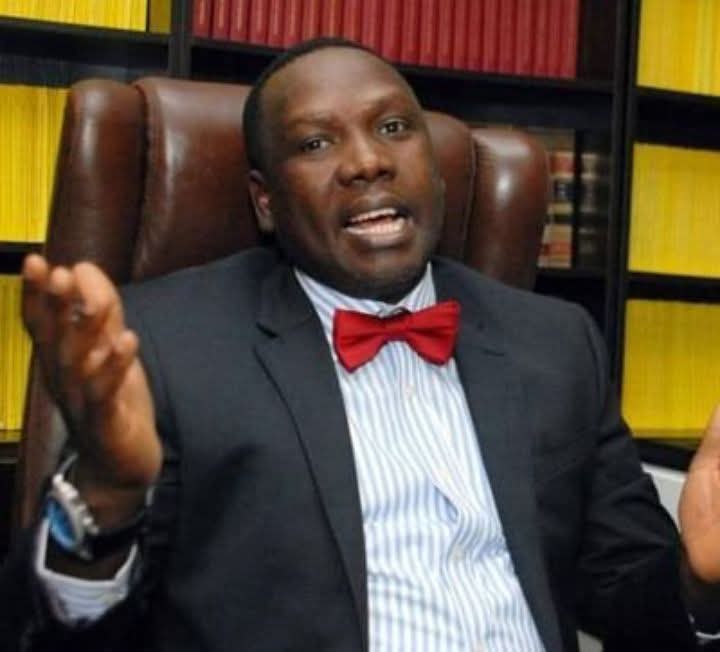
The Special Adviser to the President on Policy Communication, Daniel Bwala, has claimed that electricity supply has improved across parts of Nigeria under the administration of Bola Tinubu. Speaking during an appearance on ARISE News, Bwala argued that Nigerians now enjoy better access to power compared to 2015 and even 2023. “Light has improved in parts of the country; Nigerians have more power now than they did in 2015 and 2023,” he stated. According to him, this progress is not accidental but the result of deliberate policy decisions and legislative reforms aimed at restructuring Nigeria’s power sector. Bwala explained that the government has created a more flexible legal framework, enabling states, local governments, and private investors to actively participate in electricity generation and distribution. “We have created the legislative environment that has given rise to the capacity of states, local governments, and even the private sector to participate in both generation and distribution of power,” he added. These reforms, he noted, are intended to open up the electricity market and address long-standing supply gaps. While challenges persist, Bwala maintains that the changes are already translating into improved electricity availability in various parts of the country. Despite these claims, many Nigerians remain skeptical. For a large number of citizens, inconsistent power supply, high tariffs, and frequent outages still define daily reality. Critics argue that statements like these feel disconnected from the lived experiences of ordinary Nigerians, raising questions about whether the reported “improvements” are widespread or limited to select areas. As the debate continues, one thing is clear: Nigerians are less interested in political assurances and more concerned with stable, reliable electricity that meets their everyday needs.

High Court Sentencing in Nursery Case
Passing sentence on Friday, High Court judge Mr Justice Choudhury said the tragic events meant that Noah’s parents, Mr and Mrs Sibanda, would never see their child alive again. The court reviewed CCTV footage from the baby room, which the judge described as “shocking.” The footage revealed repeated instances of rough handling of babies by several nursery practitioners, including Miss Cookson, often occurring in the presence of a manager. The judge noted that babies were frequently tightly swaddled and then covered with blankets or cloth—an “established” but dangerous practice. He emphasised that no staff member challenged this behaviour, allowing unsafe conditions to persist. “These dangerous and unacceptable practices, which went unchecked at the nursery, reached their inevitable conclusion on 9 December 2022,” he said. Addressing Cookson directly, the judge added: “In my judgment, Noah’s suffering may not have been obvious to you, but it ought to have been. This is not a case where you knowingly set out to suffocate or asphyxiate. “You are clearly remorseful. You have attempted to understand that Noah’s parents are the real sufferers here, and you have not sought to blame others.” In response, Ofsted, which ordered the nursery to close shortly after the incident, expressed deep regret. “Our thoughts remain with Noah’s family, and we are deeply sorry for their loss,” the statement read. “No child should ever come to harm in a place that is meant to keep them safe.” The organisation added that the government has announced new funding to enable more frequent nursery inspections, as part of ongoing efforts to improve child safety.
Popular Nigerian Sports Journalist Temisan Okomi Dies
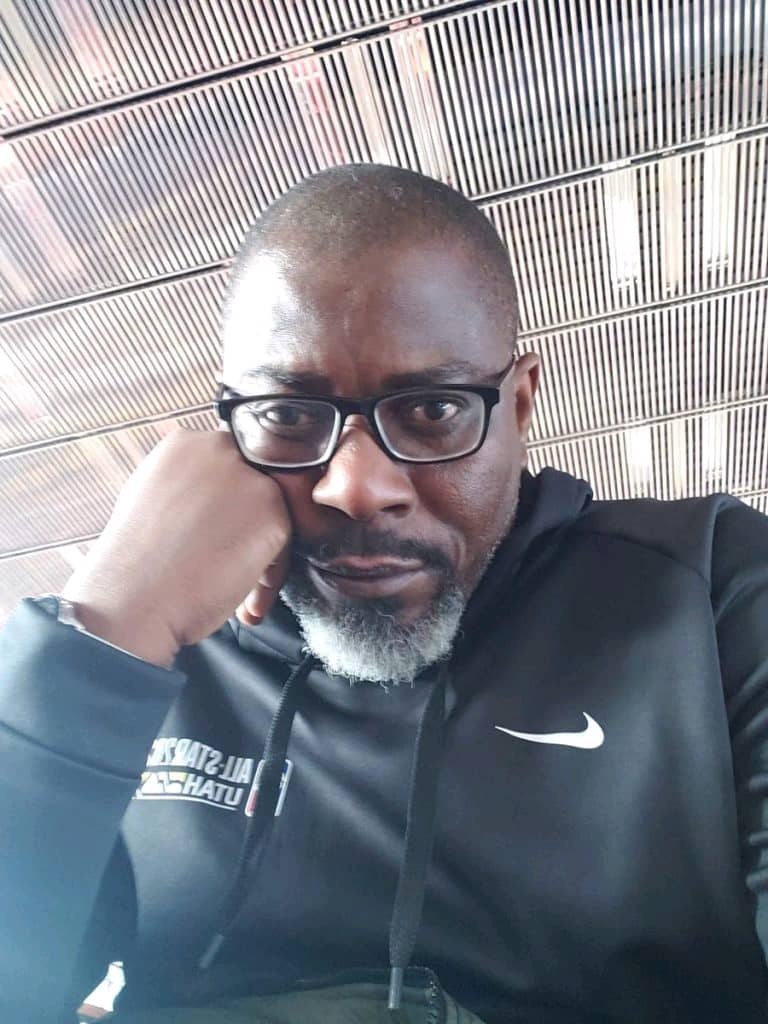
Popular Nigerian sports broadcast journalist, Temisan Okomi, has passed away. The sad news was announced on Friday by Olawale Adigun of News Central via his 𝕏 (formerly Twitter) handle. Reacting to the loss, Adigun wrote: “The worst way to go into the weekend is hearing about Temisan Okomi’s passing. I’m so gutted and, at the same time, terrified. This man meant so much to me.” Okomi was widely respected in the sports media space, having worked with Classic FM 97.3, Lagos Television, HiTV, and other prominent media organisations across Nigeria. His final post, shared on April 14, 2026, read: “The Champions League is hard, man.” Fernandez Set for Chelsea Return Amid Uncertain Future Meanwhile, Argentine midfielder Enzo Fernandez is set to return for Chelsea FC this weekend after serving an internal suspension. However, uncertainty remains over his long-term future at Stamford Bridge. Fernandez sparked controversy during the international break after granting multiple interviews while on duty with Argentina, where he expressed a desire to one day live in Spain’s capital. His comments reignited speculation linking him with Real Madrid. The situation led to a two-match suspension agreed upon by head coach Liam Rosenior and the club’s hierarchy. His representative, Javier Pastore, attempted to have the ban reduced, but the appeal was unsuccessful. As a result, Fernandez missed Chelsea’s 7–0 FA Cup semi-final victory over Port Vale, as well as their 3–0 Premier League defeat at home to Manchester City. In a recent interview, Pastore suggested that Chelsea’s struggle to secure a UEFA Champions League spot could influence his client’s future. Another loss has left the London club four points behind Liverpool FC in the race for fifth place.
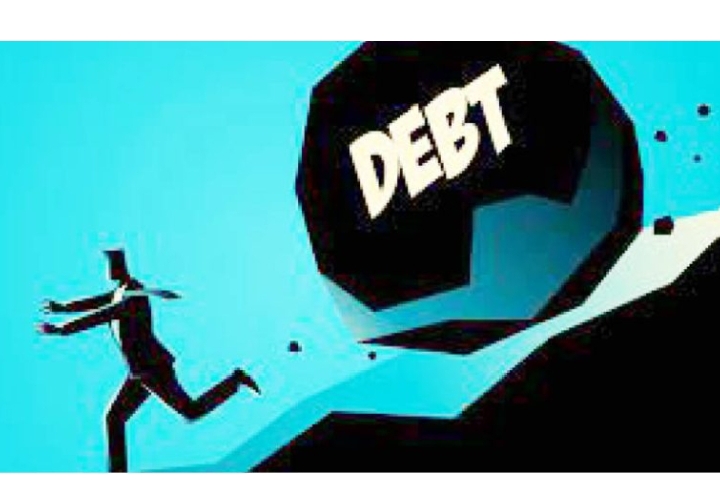
NIGERIA DAILY: Why Every Nigerian Now Owes ₦724,000.
Nigeria’s public debt continues to rise, with the latest figures from the Debt Management Office showing it stood at ₦159.28 trillion as of December 31, 2025. This represents an estimated burden of about ₦724,000 for every Nigerian. The growing debt profile is raising urgent concerns about how the government plans to service and repay these obligations. It also prompts critical questions about what future administrations may inherit and the broader implications for the country’s economic stability. For ordinary Nigerians, the effects are increasingly evident, with potential impacts on public spending, taxation, and the overall cost of living.
N4.6 Billion Allegedly Diverted from Bauchi, EFCC Witness Tells Court
Thursday, April 16, 2026 A witness of the Economic and Financial Crimes Commission on Thursday told the Federal High Court in Abuja how over N4.6 billion was allegedly diverted from the coffers of the Bauchi State Government. The witness, John Ibrahim, an investigator with the commission and the first prosecution witness, gave his testimony in the ongoing trial of Bauchi State’s finance commissioner, Yakubu Adamu, before Justice Emeka Nwite. While being led in evidence by the prosecution counsel, Ibrahim told the court that the EFCC received intelligence reports in May 2024 concerning alleged fraudulent activities involving Adamu and a company, Ayab Agro Products and Freight Company Ltd, which is standing trial as the second defendant. According to him, the investigation revealed that an account belonging to I.S. Makayya Investment Resources Ltd, domiciled in Polaris Bank, was used to receive funds belonging to the Bauchi State Government. The funds were allegedly disbursed to various individuals and companies, including Ayab Agro Products. He said further analysis of bank records showed inflows of N4 billion and N650 million into the account of Emmanuel Asomugha General Enterprises, also domiciled in Polaris Bank. The witness explained that part of the funds originated from a loan granted to the company for the supply of 15,000 motorcycles to Bauchi State civil servants, a loan he said was approved while Adamu served as a branch manager at the bank. Ibrahim told the court that the EFCC contacted relevant institutions, including the Corporate Affairs Commission, and discovered that Adamu is listed as a director in Ayab Agro Products. He added that about N266 million was traced from the I.S. Makayya account to Ayab Agro Products’ account. The commission also obtained account statements from Fidelity Bank as part of its investigation. According to the witness, Adamu was invited for questioning but initially failed to honour the invitation. He was later arrested in 2025 and gave a statement. The witness said Adamu claimed the funds received by his company were repayments of a loan his agric business had granted to an individual. However, Ibrahim told the court that the defendant could not explain why an agriculture-based company was issuing such loans. He further stated that the loan obtained by Emmanuel Asomugha General Enterprises was backed by an irrevocable standing payment order issued by the Bauchi State Government through the Office of the Accountant-General. However, he alleged that the loan was not used for its intended purpose. Instead, transactions showed funds being moved to various companies and Bureau De Change operators. Some of the individuals and entities invited during the investigation reportedly stated that they converted the funds into foreign currency and handed them over to certain officials. The witness listed beneficiaries of the funds to include I.S. Makayya, Dnice Number City, Amy Trading Ltd, Umman Engineering, Assar Global Ltd, Inabi Nigeria Ltd, and Zailali Idriss, among others. Several documents, including bank statements and correspondence with regulatory bodies, were tendered and admitted as evidence in court. Justice Nwite adjourned the case until May 4, 2026, for continuation of the trial.

MTN Nigeria Suspends Airtime, Data Borrowing Services Over New Regulations.
MTN Nigeria has announced the temporary suspension of its airtime and data borrowing service, popularly known as Xtratime, citing new regulatory requirements. In a corporate filing to the Nigerian Exchange Limited on Thursday, the telecom giant explained that the decision is part of efforts to comply with the Digital, Electronic, Online or Non-Traditional Consumer Lending Regulations, 2025. Why MTN Suspended Xtratime According to a statement signed by Company Secretary Uto Ukpanah, the new rules introduce a compliance and licensing framework for digital lending services. This means telecom operators offering airtime and data advances are now classified under regulated lenders. The regulations were issued by the Federal Competition and Consumer Protection Commission, which now requires all digital lenders to formally register and meet strict operational standards. MTN stated: “This relates to the implementation of processes under the new regulatory framework for digital or non-traditional consumer credit services.” Operators were given until April 2026 to comply or face possible sanctions. What This Means for Customers While Xtratime is temporarily unavailable, MTN reassured customers that they can still purchase airtime and data through other channels such as USSD codes and digital platforms. The company also noted that the suspension is not expected to significantly impact its financial performance, given the relatively small share of the service in its overall revenue mix. Public Reaction The move has triggered widespread reactions, especially among prepaid users who depend on borrowing airtime or data in urgent situations. Many customers reported receiving this message: “Xtra Time is currently unavailable. Kindly recharge… We apologise for the inconvenience.” Some Nigerians expressed frustration online, noting that the service had become an essential backup amid rising living costs. Regulatory Context The new FCCPC regulations build on earlier 2022 guidelines and signal increased government oversight of digital lending in Nigeria. The goal is to improve transparency, protect consumers, and ensure responsible lending practices across the sector. Related Development In a separate move, the Nigerian Communications Commission has directed telecom operators—including MTN, Airtel, Globacom, and 9mobile—to begin compensating customers for poor network service starting April 2026.

FRSC Tightens Enforcement on Fuel Tanker Operators
The Federal Road Safety Corps (FRSC) has announced stricter enforcement measures targeting fuel tanker operators, stating that vehicles failing to meet “safe-to-load” standards will no longer be permitted to transport petroleum products. The Corps Marshal, Shehu Mohammed, made this known on Thursday in Abuja during the inauguration of the 2026 technical training for safe-to-load desk officers and marshals deployed to petroleum depots and terminals nationwide. Represented by Zonal Commanding Officer Comfort Asom, Mohammed emphasized that all tanker-related crashes would now undergo comprehensive investigations across the entire value chain. This includes inspecting officers, depot managers, drivers, and vehicle owners. He warned that tampering with speed-limiting devices and other critical safety systems would attract strict sanctions, including prosecution. “The era of impunity on our highways is over. Compliance with safety regulations must be absolute, and accountability must be enforced at all levels,” he stated. Mohammed noted that road transportation accounts for over 95 percent of petroleum product distribution in Nigeria, making it a high-risk operation that demands strict regulatory oversight. He highlighted the impact of the Safe-to-Load Programme, introduced in 2015 alongside Nigeria’s adoption of the 1957 United Nations Agreement on the International Carriage of Dangerous Goods by Road (ADR). According to him, compliance with valid Class G driver licences rose significantly to 99.4 percent in 2025, up from 58.2 percent at inception. Additionally, the installation of API-standard leak-proof systems and manhole covers reached 98.3 percent compliance nationwide. Despite these improvements, Mohammed disclosed that 268 tanker-related crashes were recorded in 2025. However, fatality and severity rates dropped by 61.29 percent and 15.53 percent respectively compared to 2024. He expressed concern over recurring tanker explosions in locations such as Majia, Dikko Junction, and Indorama, stressing the need for sustained vigilance and stronger enforcement. Describing the training as strategic, Mohammed said it aims to enhance the competence, professionalism, and leadership capacity of officers responsible for enforcing compliance. “At the core of our aspiration to achieve zero crashes and fatalities is our personnel. This training is not routine but a strategic investment,” he added. The Corps Marshal also announced plans to intensify monitoring through physical inspections and technology-driven compliance systems across depots and transit corridors. He further directed operators to strictly adhere to maintenance schedules for safety-critical components, particularly API-standard manhole covers and valves. He commended the Nigerian Midstream and Downstream Petroleum Regulatory Authority (NMDPRA), as well as stakeholders including MEMAN, DAPPMAN, NARTO, NUPENG, and IPMAN, for their continued collaboration in improving safety standards. In his remarks, the FRSC FCT Sector Commander, Tijjani Iliyasu, stressed that petroleum transportation remains vital to Nigeria’s energy supply chain and requires strict safety management to protect lives, investments, and the environment. Also speaking, Moses Oko, representing the Major Energy Marketers Association of Nigeria (MEMAN), called for stronger collaboration among stakeholders, noting that town planners, engineers, road users, and emergency responders all play critical roles in preventing accidents. Similarly, Oyedeji Ifeoluwa of TotalEnergies emphasized the need for continuous capacity building, regulatory compliance, and the adoption of technology-driven solutions to enhance safety in petroleum transportation. He noted that TotalEnergies has maintained a long-standing partnership with FRSC, including sponsoring training programmes for officers both locally and internationally.
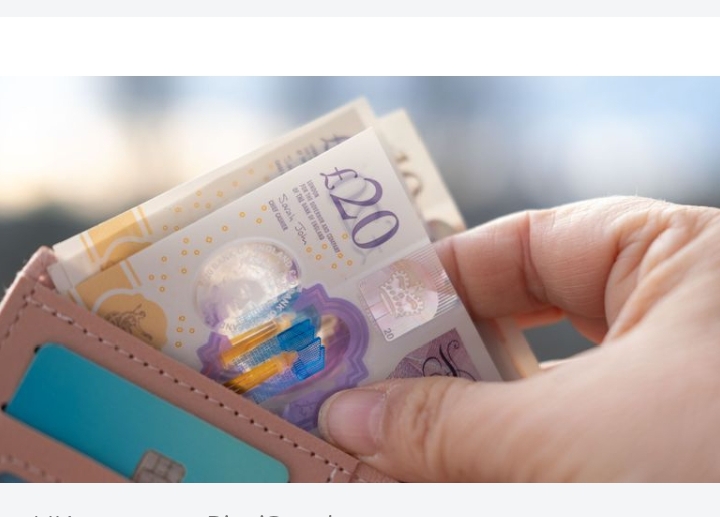
BREAKING: UK economy beats expectations, but slowdown fears remain
The UK economy recorded stronger-than-expected growth in the months leading up to the outbreak of conflict in Iran, according to newly released official figures. Data from the Office for National Statistics shows that gross domestic product (GDP) grew by 0.5% in the three months to February, surpassing economists’ forecasts. The economy also expanded by 0.5% in February alone, highlighting a short-term boost in activity. The growth was largely driven by the services sector, with strong performances in wholesaling, market research, hospitality, and publishing. However, this rebound may prove temporary. Revised figures indicate that the UK economy recorded no growth in the three months to December, suggesting underlying fragility. While industrial production rose by 1.2%—helped by a recovery in car manufacturing after disruptions at Jaguar Land Rover—the overall picture was dampened by continued weakness in the construction sector, which remained in decline. Government officials welcomed the figures, pointing to ongoing efforts to stabilise the economy, boost investment, and reduce business costs. Still, economists warn that rising geopolitical tensions and global uncertainty could weigh on growth in the months ahead.