
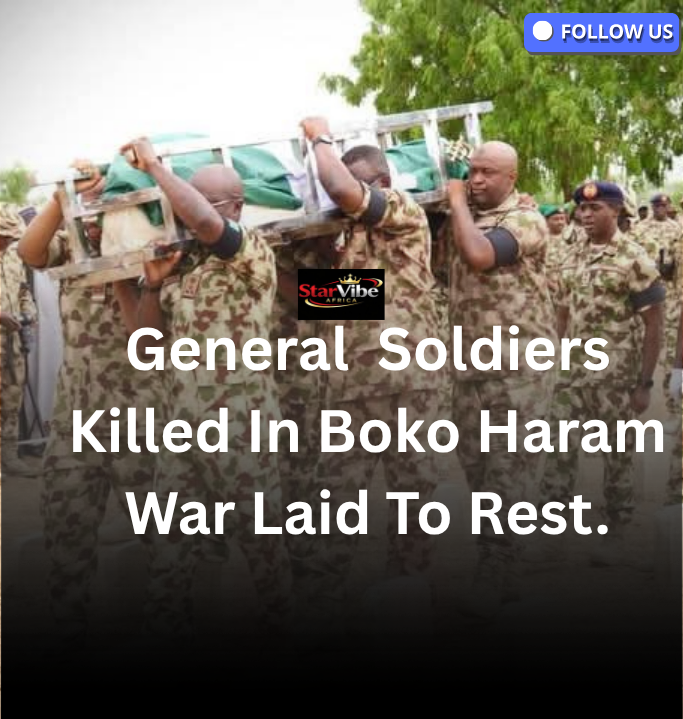
In a solemn and emotionally charged ceremony on Wednesday, April 15, 2026, the nation laid to rest the late Brigadier General Omo Braimah, Captain Azubuike Michael Esimai, and other gallant soldiers who paid the supreme price in the line of duty. The burial, held at the Maimalari Cantonment Cemetery in Maiduguri, Borno State, was marked by deep sorrow, honour, and reflection, as grieving families, friends, and fellow service members gathered to bid farewell to the fallen heroes. The deceased were accorded full military honours in recognition of their selfless service and unwavering commitment to the defence of the nation. Their sacrifice stands as a poignant reminder of the heavy price paid daily by members of the Armed Forces in safeguarding Nigeria’s peace, unity, and security. Dignitaries present at the ceremony included the Executive Governor of Borno State, Professor Babagana Umara Zulum; the Honourable Minister of Defence, General Christopher Musa (Rtd); the Chief of Defence Staff; the Chief of Army Staff; and other senior military officers. In their tributes, the leaders described the fallen soldiers as true patriots who stood firm in the face of danger and made the ultimate sacrifice so that others might live in safety. They noted that the courage and sense of duty displayed by the deceased would continue to inspire future generations and remain etched in the nation’s history. Prayers were offered for the peaceful repose of their souls, while citations highlighting their service and sacrifice were read in the presence of their next of kin. The grief of their families underscored the human cost of the nation’s security efforts, even as their bravery remains a source of pride and honour. As the nation mourns, it is reminded that the freedom and stability it enjoys come at a profound cost—paid by brave men who placed duty above self and gave their all in service to their fatherland.

Senate Gives Nigerian National Petroleum Company Limited April 29 Deadline Over N210tn Audit Queries
The Senate, through its Committee on Public Accounts, has issued a firm deadline of April 29 for the management of the Nigerian National Petroleum Company Limited to appear before it and account for N210 trillion flagged in audit reports spanning 2017 to 2023. The committee directed the Group Chief Executive Officer, Bashir Bayo Ojulari, to appear alongside his predecessor, Mele Kyari. Also summoned are former Chief Financial Officer Umar Ajia, Dr Bala Wunti, and the company’s external auditors. The decision followed a motion moved by Osita Izunaso and seconded by Adams Oshiomhole during Wednesday’s session. Chairman of the committee, Aliyu Wadada, stated that the Senate was dissatisfied with the explanations provided so far, stressing that Nigerians deserve clear and detailed accountability. He noted that the NNPCL attributed N103 trillion of the queried amount to liabilities but failed to provide a proper breakdown. “Liabilities include components such as retention fees, legal fees, and audit fees. Each must be clearly itemised and explained,” Wadada said. He further demanded clarification on the remaining N107 trillion, which the company claimed was spent on joint venture cash calls and funds allegedly owed by unnamed defunct banks. “The committee is not satisfied with the blanket explanations given. Comprehensive and verifiable details must be provided,” he added. The Senate consequently resolved to give the company an additional two weeks to comply, warning that the deadline must be honoured without fail. Earlier, committee member Abdul Ningi urged the Senate to exercise its constitutional powers to compel attendance, citing repeated failures by NNPCL officials to respond to invitations. “We must treat this matter with the seriousness it deserves. The strength of democracy depends largely on the authority of the legislature,” he said.

EU to introduce age verification app to protect children online.
The European Union is set to roll out a new age-verification app aimed at improving online safety for children, according to European Commission President Ursula von der Leyen. Speaking on Wednesday, von der Leyen said the app is technically ready and will be launched soon as part of broader efforts across the EU to better protect minors on the internet. She highlighted growing concerns about children’s online experiences, noting that bullying remains widespread. According to her, one in six children experiences online bullying, while one in eight admits to engaging in it. Several EU countries—including France, Denmark, Greece, Italy, Spain, Cyprus, and Ireland—have already announced plans to integrate the app into their national systems. The initiative comes as governments consider setting minimum age requirements for social media use, though a reliable and privacy-compliant verification method has been lacking. Von der Leyen also warned about the impact of social media on young users, pointing to features like endless scrolling, short-form videos, and highly personalised content, which she said can be addictive and harmful to developing minds. She called for a unified European strategy to tackle these challenges, adding that an expert group is expected to present further recommendations by the summer.
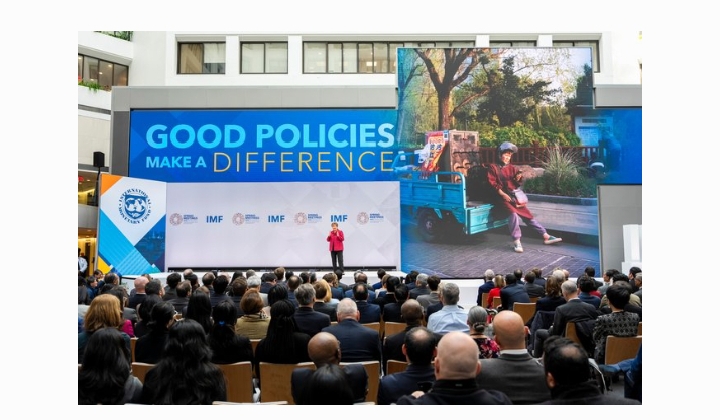
IMF Cuts Global Growth Forecast Amid Middle East Conflict
The International Monetary Fund (IMF) has lowered its global economic growth projections, warning that escalating tensions in the Middle East and disruptions to energy supplies are threatening stability. In its latest outlook released Tuesday, the IMF said the global economy risks being “thrown off course” due to the outbreak of war in the region at the end of February 2026. The fund noted that while previous concerns centered on trade tensions and policy uncertainty, the current slowdown is largely driven by reduced access to raw materials. This is linked to disruptions in the Strait of Hormuz—a critical global shipping route—and heightened uncertainty surrounding the conflict involving Iran. Global growth is now projected at 3.1% for 2026, down from the 3.3% forecast in January, and 3.2% in 2027. These figures remain below the long-term average, signaling a more subdued economic outlook. IMF Managing Director Kristalina Georgieva warned that even under favorable conditions, a quick return to pre-war growth levels is unlikely. Instead, global expansion may settle at a structurally lower pace, well below the 3.7% average recorded between 2000 and 2019. The IMF also flagged short-term inflation risks, with rising energy costs expected to push prices higher. Inflation forecasts for the United States and the eurozone have already increased, although long-term expectations remain stable. Global inflation is now expected to reach 4.4% in 2026 before easing to 3.7% in 2027—still above the 2% target commonly set by central banks. Despite these pressures, the IMF does not currently see major central banks, such as the Federal Reserve or the European Central Bank, facing immediate pressure to tighten policy. Growth projections for key economies were also revised downward. The eurozone is now expected to grow by 1.1% in 2026 and 1.2% in 2027, while the United States is forecast to expand by 2.3% in 2026 and 2.1% the following year. Germany’s outlook has also weakened, with growth now projected at 0.8% for 2026, reflecting the heavy impact of rising energy costs on its recovery. The IMF noted that supply disruptions tied to the Strait of Hormuz have pushed up global oil and gas prices, increasing fuel costs worldwide. In response, Germany has introduced temporary fuel tax cuts, lowering petrol and diesel prices, and is considering additional support measures, including tax-free bonuses for workers.
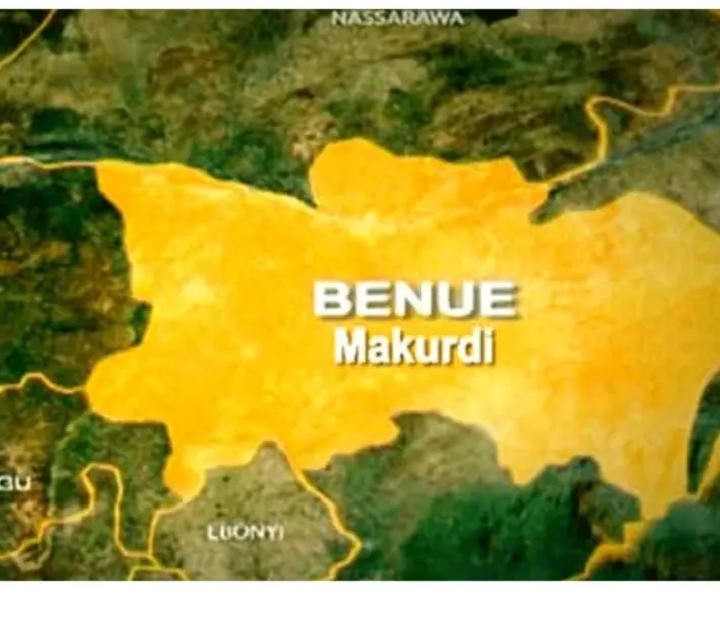
Grief Engulfs Benue Community as Nine Victims of Herdsmen Attack Are Laid to Rest
Residents of Edikwu Ankpali in Apa Local Government Area of Benue State have been thrown into deep mourning following the burial of nine people killed in a recent attack by suspected herdsmen. The tragic incident, which occurred on Monday, has further heightened tensions across parts of the state, especially in rural communities that have long complained about insecurity. Community members and bereaved families, while confirming the identities of the victims, lamented what they described as the persistent failure to adequately secure vulnerable areas. Those killed in the attack have been identified as Elaigwu Pelu (31), Oigene Ogah (62), Adah Aboje (78), Peter Omafu (59), and John Peter Musa (33). Others include Ogagwu John (31), Eluma Ogbeni (30), John Elegbo (39), and Gideon Monday (29). Many of the victims were breadwinners, leaving behind children and dependents now faced with an uncertain future. Residents stressed that beyond the number of lives lost, each victim played a crucial role in the community, making the tragedy even more devastating. Communities across Apa LGA have repeatedly raised alarm over growing insecurity, calling on authorities to take decisive action to address the situation and prevent further attacks. The incident has also sparked outrage on social media, with many Nigerians demanding an end to the killings and stronger security measures to protect lives and property. With the burials now concluded, attention has shifted to government authorities, as calls for accountability and improved protection continue to grow. For many in Edikwu Ankpali, one haunting question remains: how many more lives must be lost before lasting solutions are implemented?
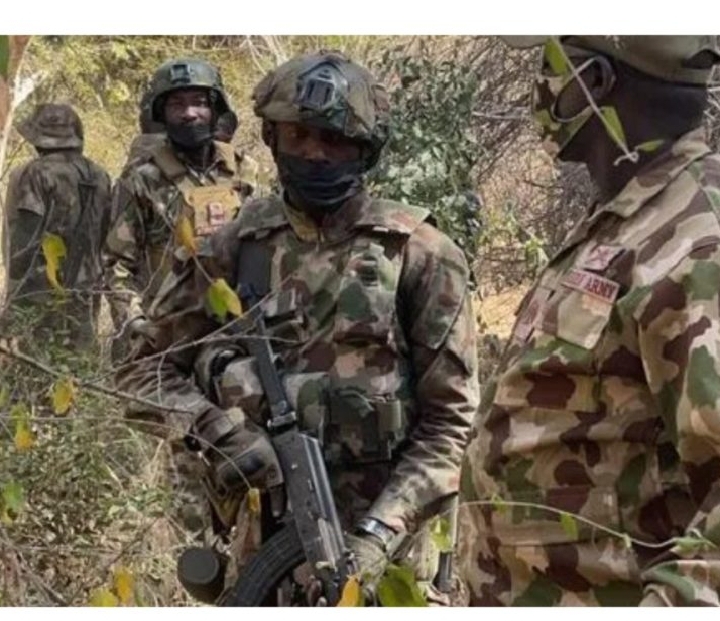
Troops Recover IED, N2m Ransom, Arrest Suspect in Enugu
The Nigerian military has recorded significant operational successes in Enugu State, including the recovery of an improvised explosive device (IED), ₦2 million suspected to be ransom proceeds, and the arrest of a suspected kidnapper. The operations were carried out by troops of the Nigerian Army’s 82 Division under Operation UDO KA, according to an update obtained in Abuja on Tuesday. In one operation, troops of the 82 Division Garrison, in collaboration with the 103 Battalion and the Air Component, conducted clearance missions in Ajali Forest, located in Ezeagu Local Government Area. The exercise targeted hideouts linked to the proscribed Indigenous People of Biafra (IPOB) and its armed wing, the Eastern Security Network (ESN). During the operation, an anti-tank improvised explosive device was discovered along the axis. The device was safely recovered and relocated by an Explosive Ordnance Disposal team after three failed detonation attempts. Troops also intensified clearance efforts within the forest, deploying heavy equipment such as bulldozers and chainsaws to dismantle camps and restrict the movement of criminal elements. In a separate operation in Adani, Uzo-Uwani Local Government Area, troops acted on intelligence linking ransom payments from a kidnapping incident to a specific location near their deployment. According to the report, the funds were electronically tracked, leading to swift action by the troops, who apprehended a suspect’s brother at the identified location. A subsequent search of the residence led to the recovery of a pump-action rifle and ₦2 million in cash. The suspect, along with the recovered items, has been handed over to the appropriate authorities for further investigation and possible prosecution. The military confirmed that all operations were conducted successfully without any casualties.
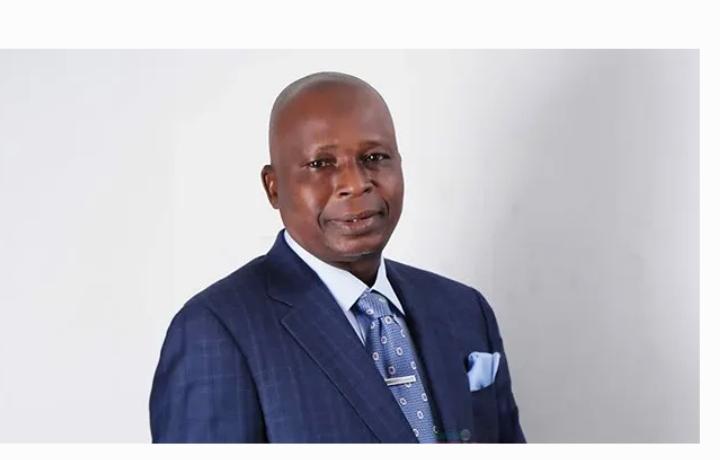
FG Unveils Justice Reform Plan, Targets Prison Decongestion
The Federal Government has launched a new initiative aimed at reforming Nigeria’s criminal justice system, reducing congestion in correctional centres, and promoting a more humane approach to justice. The Attorney-General of the Federation and Minister of Justice, Lateef Fagbemi, introduced the National Minimum Standards (2025) alongside a Harmonised Restorative Justice Training Curriculum and Manual (2025) on Tuesday. According to him, the initiative represents a major step forward in strengthening the country’s justice system. He explained that the new framework is designed to ensure consistency, accountability, and improved performance across institutions involved in criminal justice. Fagbemi emphasized that the reforms will encourage a system that is not only effective but also fair, inclusive, and responsive to the needs of victims, offenders, and the wider community. He noted that Nigeria has already made progress through the implementation of the Administration of Criminal Justice Act, which introduced measures to speed up trials and reduce overcrowding in correctional facilities. The newly launched standards, he said, will further support the adoption of restorative justice practices—an approach that focuses on reconciliation, rehabilitation, and community involvement rather than punishment alone. “These guidelines will help institutionalise non-custodial measures and alternative dispute resolution mechanisms,” he added. Fagbemi also revealed plans by the Ministry of Justice to organise a three-day intensive training programme for judges and mediators. The training is expected to strengthen capacity and ensure effective implementation of restorative justice practices nationwide. Meanwhile, the Chief Judge of the Federal High Court, John Tsoho, described the ACJA 2015 as a landmark reform that has significantly improved justice delivery in Nigeria. He praised the new training curriculum, noting that it promotes compensation for victims, reconciliation between parties, and the rehabilitation of offenders—key elements needed for sustainable peace. Also speaking, Leticia Ayoola-Daniels, Director of Administration of Criminal Justice Reforms, said the initiative sets clear operational standards while aligning Nigeria’s justice system with global best practices. She acknowledged the support of development partners, including the United Nations Office on Drugs and Crime, for their role in making the reforms possible. The federal government reiterated its commitment to building a justice system that protects victims, rehabilitates offenders, and ultimately contributes to safer communities.
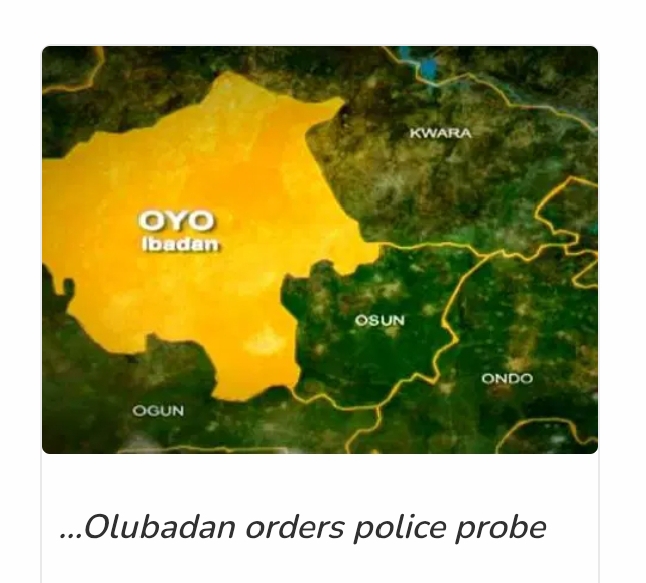
Tension has escalated in Ibadan following the killing of a 47-year-old farmer, allegedly by suspected Fulani herders, in Asa Village, Okelade area of Ido Local Government Area.
The victim, identified as Chief Mutairu Oladosu, who held the title of Otun Balogun of Oluode Okelade, was reportedly attacked while tending to his tomato farm. Eyewitness accounts revealed that the assailants stormed the farm and launched what was described as an unprovoked attack. The farmer, who was with one of his daughters at the time, was said to have been overpowered by the attackers, who were armed with dangerous weapons. Confirming the incident, Oba Wahab Olabamiji, the Okelade Okin, stated that the attack involved three suspected herders. He added that one suspect has been apprehended and handed over to the police for investigation. In response to the incident, the Olubadan has ordered a police probe into the killing. Speaking on the development, Oba Olabamiji said the community leadership visited the palace to brief the monarch on the rising insecurity in the area. According to him, residents have raised concerns over the activities of herders, alleging that beyond grazing on farmlands, they now pose a serious threat to lives and property. The incident has further heightened fears among locals, with calls for urgent security intervention across affected communities in Oyo State.

Trump launches extraordinary attack on Pope Leo. Here’s what’s going onDonald Trump didn’t hold back with his criticism of Pope Leo overnight, but what is it about the pontiff that’s riled the president?
In a speech last month, the head of the Catholic Church said God rejected the prayers of leaders who start wars and have their “hands full of blood” in a reference to the US president. He also called the conflict in Iran “atrocious” and urged Trump to find an “off-ramp” and “decrease the amount of violence”. Separately, he described the president’s recent threat to destroy Iranian civilisation as “truly unacceptable” and called for dialogue. He offered more thinly veiled criticism after the US raided Venezuela and abducted its president, Nicolas Maduro, saying in January that “war is back in vogue and a zeal for war is spreading”.Pope Leo has further questioned Trump’s “inhuman” immigration policies, saying he was uncertain whether they were “pro-life”. In response, the president gave the faith leader a withering assessment of his own overnight. Posting on his own social network, Truth Social, he accused him of being “WEAK on crime, and terrible for Foreign Policy”. He wrote: “I don’t want a Pope who thinks it’s OK for Iran to have a Nuclear Weapon. “I don’t want a Pope who thinks it’s terrible that America attacked Venezuela, a Country that was sending massive amounts of Drugs into the United States and, even worse, emptying their prisons, including murderers, drug dealers, and killers, into our Country.” He also said the Catholic Church had only elevated the Chicago-born cardinal in a bid to curry favour with himself. “If I wasn’t in the White House, Leo wouldn’t be in the Vatican,” he wrote. He concluded: “Leo should get his act together as Pope, use Common Sense, stop catering to the Radical Left, and focus on being a Great Pope, not a Politician. “It’s hurting him very badly and, more importantly, it’s hurting the Catholic Church!” Share on FacebookShare on X

Ex-Army Chief Tukur Buratai Speaks On Borno Airstrike Tragedy.
Former Chief of Army Staff, Tukur Buratai, has reacted to the recent airstrike on Jilli Market along the Borno–Yobe border, describing the incident as both tragic and deeply regrettable. Reports indicate that the strike resulted in the deaths of over 50 people, with many others sustaining injuries, sparking widespread concern across the country. In a statement issued on Sunday, Buratai explained that the operation was based on credible intelligence. According to him, fighters from Boko Haram and ISWAP were allegedly using the market as a strategic base to collect levies, source supplies, and coordinate attacks. While expressing sympathy for the victims and their families, he commended the Nigerian Air Force for what he described as professionalism and bravery in carrying out the operation. Buratai further claimed that Jilli Market has long been identified as a hub for insurgent activities. He noted that the location had been targeted multiple times in the past due to its role in supporting terrorist logistics. According to him, the area came under military control during Operation LAST HOLD in 2018, during which troops engaged insurgents in several confrontations. Despite these efforts, the market reportedly continued to function, allegedly due to the involvement of individuals trading with militant groups. He acknowledged that civilian casualties are always unfortunate but attributed the situation to insurgents operating within civilian environments. Buratai emphasized that while the military does not intentionally target civilians, it remains obligated to act decisively when locations are repeatedly used for terrorist operations—especially after prior warnings have been issued.