
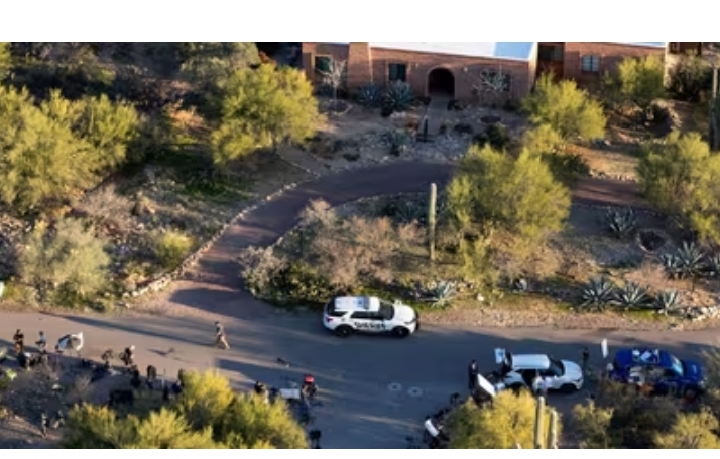
A retired FBI profiler has suggested that blood found outside the home of Nancy Guthrie may point to a chilling detail about her disappearance. Speaking on a podcast hosted by Brian Entin, former FBI profiler Jim Clemente said the blood spatter pattern could indicate that only one person was involved in the alleged abduction of the 84-year-old. According to Clemente, if multiple attackers had been present, they would likely have had full control of the victim and prevented any struggle. Instead, he noted signs suggesting she may have been injured and coughing up blood while on the ground. He also pointed out that there is no clear evidence so far—such as multiple shoe prints—to confirm the involvement of more than one suspect. Footage released shortly after Guthrie’s disappearance showed what appeared to be a trail of blood outside her Tucson home, with visible stains leading up to the door. Reports also confirmed that blood was found inside the house. Another former FBI agent, Maureen O’Connell, previously explained that the blood pattern suggests Guthrie may not have walked out on her own. Instead, the absence of gaps or “voids” in the blood stains could mean she was already unconscious and possibly carried out. “In my view, she was likely wrapped up and removed from the home,” O’Connell said.

California Hunter Killed by Elephants During Gabon Safari
A 75-year-old American big game hunter, Ernie Dosio, has died after being trampled by a herd of elephants during a hunting trip in central Africa. Dosio, a wealthy vineyard owner from Lodi, California, was reportedly attacked on April 17 in the dense forests of Gabon. The incident occurred when he and his guide unexpectedly encountered a group of female elephants accompanied by a calf.
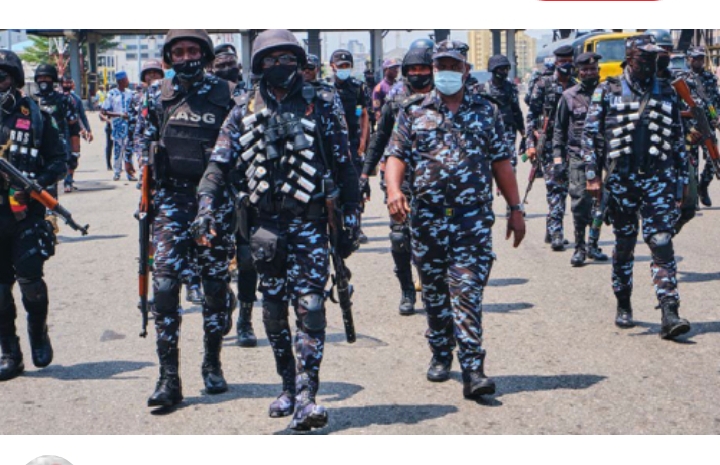
Bandits have killed a pastor in Adamawa State after attacking Zinai village in Bolki, Song Local Government Area.
The victim, identified as Emmanuel Ezeoikwe, was reportedly shot when suspected gunmen stormed the community in the early hours of Tuesday. Confirming the incident in a statement on Thursday, the Adamawa State Police Command spokesperson, Suleiman Nguroje, said the attack was reported at about 2:00 a.m. by a resident, Amos Sunday. According to him, police operatives responded promptly and found the victim’s lifeless body at the scene. He was taken to a hospital, where a doctor confirmed him dead. His remains have since been deposited in the morgue for an autopsy. Nguroje added that three empty AK-47 shells were recovered during preliminary investigations. He urged residents to remain calm and support ongoing investigations by providing useful information, assuring that further updates would be communicated as they emerge.

COURT BARS POLICE, FRSC FROM FINING MOTORISTS OVER THIRD-PARTY INSURANCE WITHOUT COURT ORDER.
Justice Hauwa Yilwa of the Federal High Court in Abuja has ruled that the Nigeria Police Force (NPF) and the Federal Road Safety Corps (FRSC) cannot impose fines or penalties on motorists who violate the Third Party Motor Vehicle Insurance Act without a valid court order. The suit was filed by lawyer and activist Deji Adeyanju. In her judgment delivered on Friday, April 23, Justice Yilwa restrained both agencies from sanctioning defaulting motorists unless authorised by a court. Prior to the ruling, she dismissed a preliminary objection filed by the police seeking to halt the judgment. Counsel to the police, Andrew Victor, had challenged the court’s jurisdiction, arguing that the police were not properly served and that jurisdictional issues can be raised at any stage. However, the court rejected this argument, stating that proof of service was clearly available in its records. Justice Yilwa held that while the police and FRSC have the authority to enforce the insurance law, they do not have the power to impose fines or penalties without first obtaining a court order.

FG Reaffirms Drive to Unlock Value of National Assets
The Federal Government has reiterated its commitment to unlocking the full value of Nigeria’s national assets while attracting increased global investment. Vice President Kashim Shettima made this known on Thursday during the first 2026 meeting of the National Council on Privatisation held at the Presidential Villa in Abuja. He emphasized the need for an aggressive expansion of public-private partnerships, describing them as critical to advancing the country’s economic ambitions. According to the Vice President, the administration is focused on drawing in investment and ensuring that such capital is strategically aligned with Nigeria’s national development priorities.
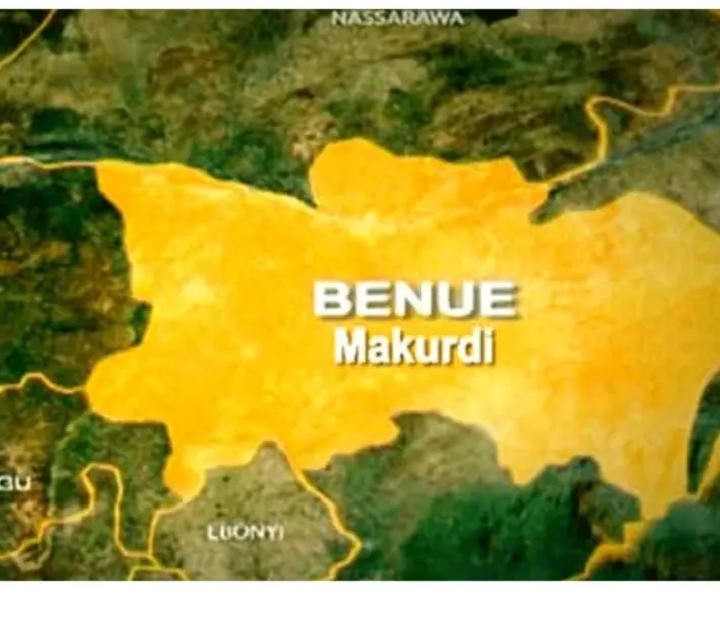
The Chairman of Buruku Local Government Area in Benue State, Hon. Raymond Aondoakura, has strongly condemned the killing of a National Youth Service Corps (NYSC) member, Ben Agir Une, allegedly assaulted by members of a local vigilante group.
The Chairman of Buruku Local Government Area in Benue State, Hon. Raymond Aondoakura, has strongly condemned the killing of a National Youth Service Corps (NYSC) member, Ben Agir Une, allegedly assaulted by members of a local vigilante group. The incident occurred in Anibros Settlement, Buruku LGA, where Une—an indigene of Tongov in Katsina-Ala LGA—was reportedly apprehended during a night patrol on suspicion of possessing a stolen motorcycle. According to reports, the corps member was severely beaten during the arrest, leaving him critically injured. He was later taken to a police station, where officers advised that he be rushed to a medical facility for urgent treatment. He was subsequently confirmed dead at the hospital. Reacting to the incident, Aondoakura described the killing as a grave violation and stressed that it does not reflect the values of the community. “This unfortunate act does not in any way represent who we are as a people. It is a grave violation, and it will not be tolerated,” he said. The chairman extended condolences to the deceased’s family, the people of Katsina-Ala LGA, and the NYSC, describing the loss as a painful blow to the nation. He disclosed that all individuals involved have been apprehended by security agencies and directed that a thorough investigation and diligent prosecution be carried out. “We will not shield anyone found culpable. The law must take its full course,” he added. Aondoakura also cautioned community vigilante groups against taking the law into their own hands, emphasizing that suspects must always be handed over to appropriate law enforcement authorities. He further reassured residents of Buruku LGA of his administration’s commitment to maintaining peace, security, and the rule of law.The Chairman of Buruku Local Government Area in Benue State, Hon. Raymond Aondoakura, has strongly condemned the killing of a National Youth Service Corps (NYSC) member, Ben Agir Une, allegedly assaulted by members of a local vigilante group. The incident occurred in Anibros Settlement, Buruku LGA, where Une—an indigene of Tongov in Katsina-Ala LGA—was reportedly apprehended during a night patrol on suspicion of possessing a stolen motorcycle. According to reports, the corps member was severely beaten during the arrest, leaving him critically injured. He was later taken to a police station, where officers advised that he be rushed to a medical facility for urgent treatment. He was subsequently confirmed dead at the hospital. Reacting to the incident, Aondoakura described the killing as a grave violation and stressed that it does not reflect the values of the community. “This unfortunate act does not in any way represent who we are as a people. It is a grave violation, and it will not be tolerated,” he said. The chairman extended condolences to the deceased’s family, the people of Katsina-Ala LGA, and the NYSC, describing the loss as a painful blow to the nation. He disclosed that all individuals involved have been apprehended by security agencies and directed that a thorough investigation and diligent prosecution be carried out. “We will not shield anyone found culpable. The law must take its full course,” he added. Aondoakura also cautioned community vigilante groups against taking the law into their own hands, emphasizing that suspects must always be handed over to appropriate law enforcement authorities. He further reassured residents of Buruku LGA of his administration’s commitment to maintaining peace, security, and the rule of law.The Chairman of Buruku Local Government Area in Benue State, Hon. Raymond Aondoakura, has strongly condemned the killing of a National Youth Service Corps (NYSC) member, Ben Agir Une, allegedly assaulted by members of a local vigilante group. The incident occurred in Anibros Settlement, Buruku LGA, where Une—an indigene of Tongov in Katsina-Ala LGA—was reportedly apprehended during a night patrol on suspicion of possessing a stolen motorcycle. According to reports, the corps member was severely beaten during the arrest, leaving him critically injured. He was later taken to a police station, where officers advised that he be rushed to a medical facility for urgent treatment. He was subsequently confirmed dead at the hospital. Reacting to the incident, Aondoakura described the killing as a grave violation and stressed that it does not reflect the values of the community. “This unfortunate act does not in any way represent who we are as a people. It is a grave violation, and it will not be tolerated,” he said. The chairman extended condolences to the deceased’s family, the people of Katsina-Ala LGA, and the NYSC, describing the loss as a painful blow to the nation. He disclosed that all individuals involved have been apprehended by security agencies and directed that a thorough investigation and diligent prosecution be carried out. “We will not shield anyone found culpable. The law must take its full course,” he added. Aondoakura also cautioned community vigilante groups against taking the law into their own hands, emphasizing that suspects must always be handed over to appropriate law enforcement authorities. He further reassured residents of Buruku LGA of his administration’s commitment to maintaining peace, security, and the rule of law.The Chairman of Buruku Local Government Area in Benue State, Hon. Raymond Aondoakura, has strongly condemned the killing of a National Youth Service Corps (NYSC) member, Ben Agir Une, allegedly assaulted by members of a local vigilante group. The incident occurred in Anibros Settlement, Buruku LGA, where Une—an indigene of Tongov in Katsina-Ala LGA—was reportedly apprehended during a night patrol on suspicion of possessing a stolen motorcycle. According to reports, the corps member was severely beaten during the arrest, leaving him critically injured. He was later taken to a police station, where officers advised that he be rushed to a medical facility for urgent treatment. He was subsequently confirmed dead at the hospital. Reacting to the incident, Aondoakura described the killing as a grave violation and stressed that it does not reflect the values of the community. “This unfortunate act does not in any way represent who we are as a people. It is a grave violation, and it will not be tolerated,” he said. The chairman extended

INEC Clears Chairman as Calls for Amupitan’s Resignation Intensify
Pressure is mounting on the Chairman of the Independent National Electoral Commission (INEC), Prof. Joash Ojo Amupitan, to step down following allegations linking him to pro-Tinubu posts on X (formerly Twitter). Civil society groups, opposition figures, and Nigerians in the diaspora have raised concerns that the controversy could undermine public trust in the electoral body ahead of the 2027 general elections. On Monday, protesters gathered at INEC’s Lagos office and outside the UK Parliament, demanding Amupitan’s resignation. The demonstrations were supported by diaspora groups and the youth wing of the African Democratic Congress (ADC). A coalition known as the Movement for Credible Elections (MCE), led by prominent figures including Pat Utomi, Femi Falana, and Oby Ezekwesili, described the situation as a “crisis of credibility.” The group urged Amupitan to step aside to allow for an independent and transparent investigation. They warned that the controversy could damage Nigeria’s democratic process, stressing that trust in the electoral body is essential for credible elections. Meanwhile, INEC has dismissed the allegations, stating that a forensic investigation found no evidence linking the chairman to the disputed X account. According to the commission, the posts were part of a coordinated disinformation campaign. INEC cited technical inconsistencies, including timestamp errors, and noted that the account had been altered and labeled as a parody. It also denied any connection between the account and Amupitan’s personal details, such as his phone number or email. Despite this, skepticism remains high. Critics have questioned the independence and credibility of the investigation, with many Nigerians expressing doubts on social media and calling for a more transparent probe. The ADC youth wing also staged a protest in Lagos, insisting that Amupitan must resign to restore confidence in the electoral system. The protest followed earlier demonstrations in Abuja involving key political figures. An APC chieftain, Farouk Adamu Aliyu, called for an independent investigation, stating that Amupitan should be removed if the allegations are proven. He emphasized that the credibility of INEC is crucial to maintaining stability and public trust. The controversy stems from viral screenshots of an X account allegedly linked to Amupitan, which appeared to show support for the ruling party during the 2023 elections. While some analyses suggest possible connections, they fall short of definitive proof. As reactions continue to pour in, many Nigerians warn that failure to address the issue transparently could erode voter confidence and affect participation in future elections.
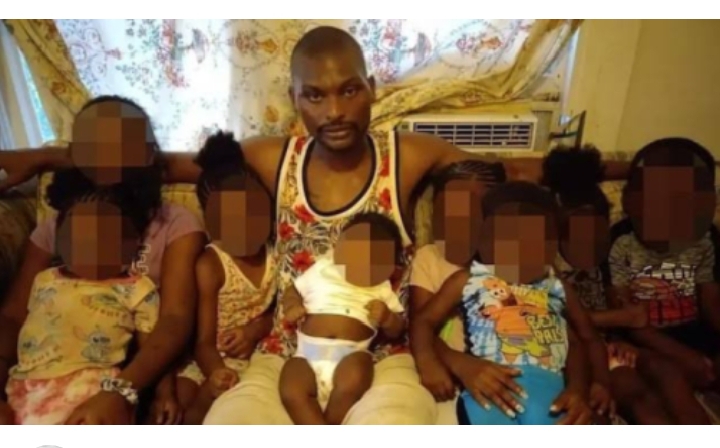
A 31-year-old man, Shamar Elkins, who fatally shot eight children on Sunday morning in Shreveport, has been identified as the father of seven of the victims.
The eighth child was a cousin of the deceased children. The victims, aged between three and 11, were killed in a shooting that also left two women seriously injured. A teenager sustained additional injuries that were not considered life-threatening. According to police, officers responded to reports of gunfire on West 79th Street at about 6:00 a.m. The crime scene spanned two homes on that street and a third residence on nearby Harrison Street. Authorities said the suspect initially shot a woman on the street before proceeding to a nearby home, where he carried out the attack on the children. One of the victims managed to escape to a nearby residence and alert the police. Police spokesperson Chris Bordelon confirmed that officers later shot and killed the suspect during a chase in Bossier Parish. He was the only suspect linked to the incident.

France has summoned Elon Musk as part of an ongoing investigation, according to the Paris prosecutor’s office on Saturday. Authorities have not disclosed when or where the interview will take place.
The probe centers on suspected criminal offenses linked to X, including alleged complicity in the possession of child sexual abuse material and the denial of crimes against humanity. The company has dismissed the investigation, describing it as “politically motivated.” ‘Serious Concerns’ The French case is part of a wider global backlash over Grok, an AI tool associated with X, after reports showed users could generate sexualised images of women and children using simple prompts. A report by the Center for Countering Digital Hate (CCDH) found that about three million sexualised images were created within 11 days—mostly involving women, but including around 23,000 that appeared to depict children. Separately, the UK’s data regulator launched its own investigation into X and xAI in February, citing “serious concerns” over possible breaches of personal data laws tied to Grok’s deepfake image generation. The European Union has also opened a probe into the platform over similar issues involving the creation of sexualised deepfake content featuring women and minors.

Three Dead in Ekiti Party Stampede
Three people have lost their lives following a stampede at a party in Ikere-Ekiti, Ekiti State. The incident occurred after the second convocation ceremony of Bamidele Olumilua University of Education, Science and Technology. Students who attended the ceremony on Saturday later gathered at a hotel in the town to celebrate. The situation turned chaotic in the early hours of Sunday when confusion broke out during the event. Panic spread among attendees, leading to a rush for the exit and resulting in a deadly stampede. The Ekiti State Police Command confirmed the incident and said an investigation is underway to determine the cause. According to the police spokesperson, Sunday Abutu, the Commissioner of Police, Michael Falade, has ordered a full probe into the matter. Preliminary findings indicate that the party continued late into the night before a disagreement between two students escalated into a physical altercation. The clash reportedly triggered panic, forcing others at the venue to flee. In the process, three people died — two students whose identities are yet to be confirmed, and a hotel staff member. The bodies of the deceased have been deposited in a morgue, where autopsies will be conducted. Police authorities say efforts are ongoing to establish the full circumstances surrounding the incident and identify those involved in the altercation. The Commissioner of Police also extended condolences to the families of the victims, assuring that a thorough investigation will be carried out.