

The Imo State Police Command says it has arrested three suspected members of the proscribed Indigenous People of Biafra (IPOB) and its armed wing, the Eastern Security Network (ESN). Henry Okoye, the command’s spokesperson, disclosed this in a statement on Tuesday, noting that operatives recovered more than 3,115 rounds of ammunition and surveillance drones from the suspects’ camp. Okoye said the operation took place on Saturday, when police operatives stormed a hideout in Nguru Aboh Mbaise Local Government Area of Imo State. He explained that a gun battle ensued during the raid, leading to the arrest of three suspects, while others fled the scene. According to him, the operation was intelligence-driven and followed actionable information obtained from the confessional statement of a high-ranking IPOB/ESN commander, Ebube Uchenna Mmaduakolam, also known as ‘Ebube Virus’. He added that the arrested suspects are currently in custody and are providing useful information on the group’s logistics, structure, and planned operations. A search of the camp led to the recovery of two general-purpose machine guns (GPMGs), 3,115 rounds of GPMG ammunition, one AK-47 rifle, a pump-action shotgun, several surveillance drones, and Biafran currency in different denominations. Okoye further stated that the inspector-general of police, Tunji Disu, commended the operatives for their professionalism, bravery, and tactical precision. He noted that the IGP said the seizure of the weapons and ammunition has significantly weakened the operational capacity of the IPOB/ESN network in the South-East and dealt a major blow to its activities in the region.
Yilwatda: APC warns aspirants against disrupting primaries
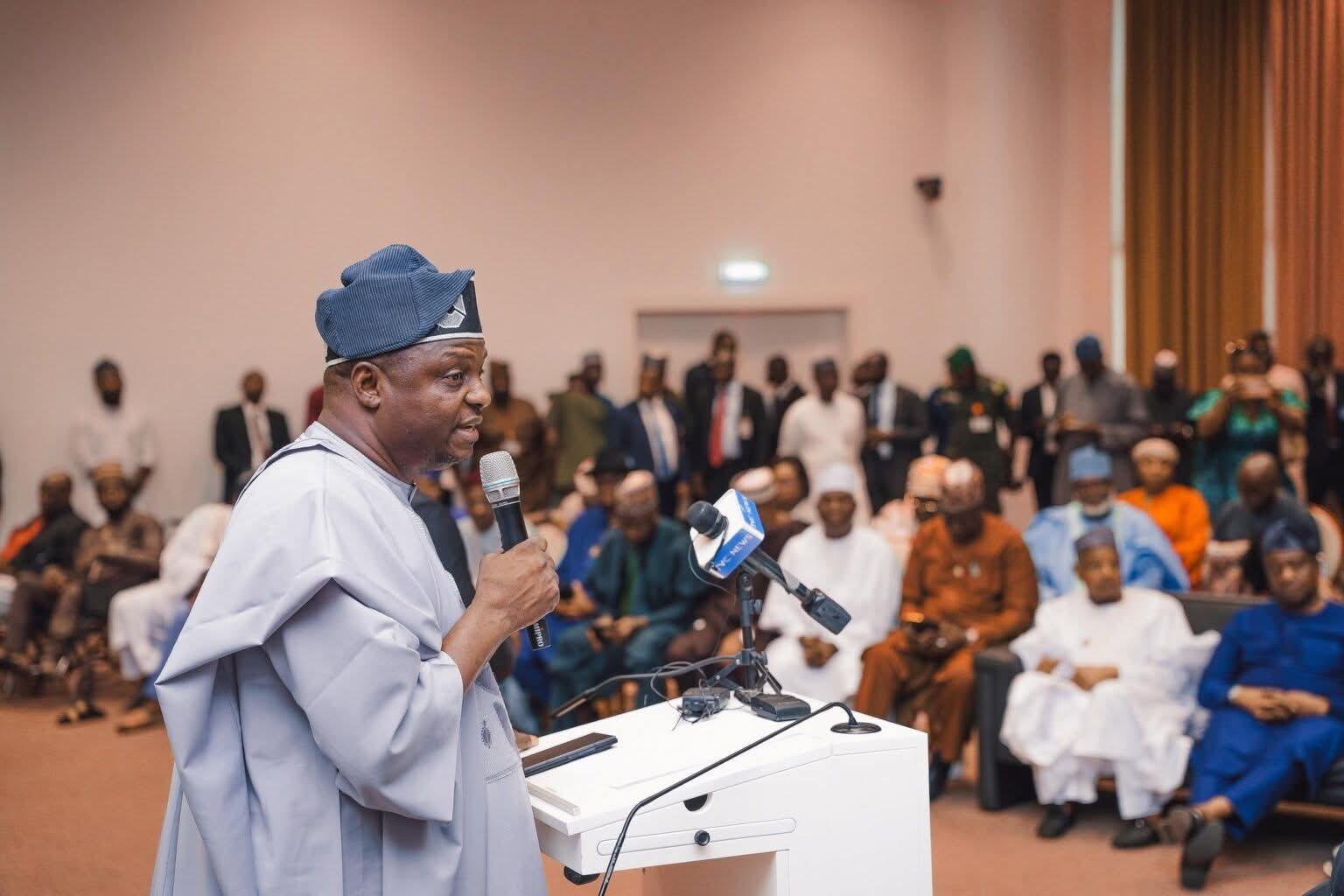
Nentawe Yilwatda, national chairman of the All Progressives Congress (APC), has warned that any aspirant who disrupts the party’s primary elections risks suspension. He gave the warning while addressing aspirants who recently completed screening by various party committees. In a statement issued by his special adviser on media and information, Abimbola Tooki, Yilwatda cautioned that aspirants and their supporters must avoid actions capable of undermining the process. He said those involved in violence, unrest, anti-party activities, or any attempt to compromise the integrity of the primaries would face strict disciplinary measures. The APC chairman urged all aspirants contesting for elective positions to demonstrate discipline, maturity, and statesmanship as the party prepares for its nationwide primaries. He reaffirmed the party’s commitment to conducting transparent, peaceful, and credible primaries, noting that this is essential to strengthening internal democracy and maintaining public confidence. Yilwatda stressed that the APC would not allow personal ambition to override the collective interest of the party, adding that every contest naturally produces both winners and losers. “In every democratic contest, only one person emerges victorious. What matters is the spirit in which the process is approached,” he said, urging aspirants to accept outcomes in good faith and uphold democratic values. He also encouraged aspirants to act as ambassadors of the party and promote unity throughout the process. Yilwatda commended President Bola Tinubu for efforts to strengthen democratic institutions and internal party processes, despite prevailing challenges. According to him, the administration has made progress through reforms aimed at economic growth and stability, including investments in infrastructure, rail transport, agriculture, energy, and support for small businesses. He further called on party stakeholders to align with the administration’s “Renewed Hope” agenda and avoid actions that could create division or heighten political tension.

CLOSE-UP: Adeyinka Famadewa, the general challenging Nigeria’s military-first security model
A new concept has entered Nigeria’s security framework — homeland security — and retired Major General Adeyinka Famadewa has been appointed to lead its implementation. His appointment, announced on Monday by the Office of the Secretary to the Government of the Federation (OSGF), has drawn attention not just because of the role itself, but also because of his long-standing views on how Nigeria approaches security. Before now, Famadewa was largely known within defence and intelligence circles. His emergence into the national spotlight has sparked mixed reactions, with some observers questioning whether the role represents meaningful reform or another structural addition to an already complex security system. As special adviser on homeland security, he is expected to strengthen coordination across agencies, improve intelligence sharing, and promote proactive strategies to address threats across the country. From chemistry to intelligence leadership Famadewa, a native of Ile-Ife in Osun state, began his military career in 1990 after being commissioned into the Nigerian Army Intelligence Corps as part of the 37 Regular Course of the Nigerian Defence Academy (NDA), Kaduna. He holds a degree in chemistry from the NDA, a master’s degree in business administration from the Federal University of Technology, Akure, and a master’s in strategic studies from the University of Ibadan. His professional development includes training at top institutions such as Harvard University’s Kennedy School of Government, the Canadian Forces College in Toronto, the George Marshall Center in Germany, and the Galilee International Management Institute in Israel. He is also a fellow of the National Defence College (NDC). Throughout his career, he held several key positions, including chief instructor at the Nigerian Army Intelligence School in Lagos, deputy director of technical development at the Defence Intelligence Agency (DIA), commander of the Nigerian Army’s counter-intelligence command, and director at the intelligence production centre. He also served in the United Nations Mission in Sudan (UNMIS) and received multiple honours, including the Meritorious Service Star (MSS). A different perspective on national security Famadewa has consistently criticised Nigeria’s reliance on the military as the primary solution to insecurity, advocating instead for a broader, more integrated strategy. In a 2023 article, he compared Nigeria’s security discourse to Salt-N-Pepa’s song “Let’s Talk About Sex,” arguing that while the topic is widely discussed, meaningful outcomes remain limited. He has called for a clearer definition of national security and a comprehensive review of Nigeria’s security strategy. He also emphasised the importance of cultural and linguistic understanding, suggesting that military personnel should be proficient in major Nigerian languages — Hausa, Igbo, and Yoruba — to improve effectiveness in operations. Bridging theory and practice One of Famadewa’s most notable contributions is the establishment of the Intelligence Fusion Centre (IFC) at the Office of the National Security Adviser (ONSA). Between 2015 and 2021, he served as principal general staff officer to the NSA, during which time the IFC was developed to unify intelligence from agencies such as the DSS, NIA, DIA, and the Nigeria Police. The initiative aimed to enhance coordination and improve Nigeria’s ability to detect and respond to threats more efficiently. His work in this area is widely regarded as a key step in modernising the country’s intelligence-sharing framework. More recently, he has advocated for a reassessment of Nigeria’s intelligence systems to better anticipate and prevent attacks, particularly from insurgent groups. Research and contributions after retirement Following his retirement, Famadewa became a senior research fellow at the Nigerian Army Resource Centre in Abuja, where he focused on policing, civil-security collaboration, and reforms within the security sector. He is also the author of “Policing and National Security in Nigeria,” a monograph that explores ways to improve cooperation among security agencies and strengthen national safety structures. Famadewa’s new role offers him the opportunity to move from critique to implementation — testing whether his long-held ideas can translate into tangible improvements in Nigeria’s security landscape.

2027: Natasha Akpoti-Uduaghan Files PDP Nomination for Kogi Senate Re-Election Bid
Senator Natasha Akpoti-Uduaghan has officially submitted her nomination and expression of interest forms to contest for a second term representing Kogi Central Senatorial District under the Peoples Democratic Party ahead of the 2027 general elections. She presented the forms on Monday at the party’s national secretariat in Abuja, accompanied by supporters, political allies, and party members. Speaking after the submission, Akpoti-Uduaghan thanked residents of Kogi Central and PDP stakeholders for their continued support, describing her re-election bid as part of her ongoing commitment to service and democratic development. She emphasized that her ambition goes beyond personal goals, noting that her focus remains on strengthening representation, empowering women and youths, and ensuring that communities benefit from democratic dividends. Looking ahead, the senator outlined key priorities for a potential second term, including infrastructure development, improved healthcare, quality education, and expanded economic opportunities across the district. “We have started a movement rooted in hope, inclusion, and progress,” she said, expressing confidence that with public support, her vision for a more inclusive and prosperous Kogi Central can be sustained. Akpoti-Uduaghan also confirmed the development in a Facebook post, reiterating her dedication to serve with “greater purpose, courage, and commitment.” The 46-year-old lawmaker had earlier declared her intention to seek re-election on April 27 during a PDP stakeholders’ meeting in Kogi Central, following consultations and endorsements across the district’s five local government areas.

Toyosi Adesanya: Some Women Joined Acting to Pursue Established Stars
Nollywood actress Toyosi Adesanya has claimed that, in the past, some young women entered the acting industry not out of passion for the craft but to form relationships with already established actors. Speaking during an interview on the Nollywood on Radio podcast, Adesanya recalled starting her acting career in 1992 with the Odunfa Caucus — a theatre group founded by Taiwo Hassan, Yinka Quadri, Abbey Lanre, and Ara Ọsan. She pushed back against widespread claims that male actors often harass women for roles, arguing instead that, in many cases, the situation is reversed. According to her, some aspiring actresses deliberately pursued actors and producers. Adesanya said she personally witnessed numerous instances of women joining the Odunfa Caucus because of their interest in figures like Taiwo Hassan and Yinka Quadri. She added that this trend still exists today, noting that some newcomers enter the industry through connections, only to begin relationships with other influential figures shortly after. She also pointed out that those who initially introduce them into the industry often lack the influence to protect them, as complaints could lead to blacklisting. Reflecting on her own journey, Adesanya emphasized that she maintained her dignity throughout her career and refused to compromise herself, even while traveling to different film locations. She also criticized the current state of the industry, lamenting that some individuals without proper training now claim stardom simply because they have financial backing. In contrast, she highlighted that actors who trained under established theatre groups were once given stipends to support themselves while learning the craft.