

The Federal Government has launched a new initiative aimed at reforming Nigeria’s criminal justice system, reducing congestion in correctional centres, and promoting a more humane approach to justice. The Attorney-General of the Federation and Minister of Justice, Lateef Fagbemi, introduced the National Minimum Standards (2025) alongside a Harmonised Restorative Justice Training Curriculum and Manual (2025) on Tuesday. According to him, the initiative represents a major step forward in strengthening the country’s justice system. He explained that the new framework is designed to ensure consistency, accountability, and improved performance across institutions involved in criminal justice. Fagbemi emphasized that the reforms will encourage a system that is not only effective but also fair, inclusive, and responsive to the needs of victims, offenders, and the wider community. He noted that Nigeria has already made progress through the implementation of the Administration of Criminal Justice Act, which introduced measures to speed up trials and reduce overcrowding in correctional facilities. The newly launched standards, he said, will further support the adoption of restorative justice practices—an approach that focuses on reconciliation, rehabilitation, and community involvement rather than punishment alone. “These guidelines will help institutionalise non-custodial measures and alternative dispute resolution mechanisms,” he added. Fagbemi also revealed plans by the Ministry of Justice to organise a three-day intensive training programme for judges and mediators. The training is expected to strengthen capacity and ensure effective implementation of restorative justice practices nationwide. Meanwhile, the Chief Judge of the Federal High Court, John Tsoho, described the ACJA 2015 as a landmark reform that has significantly improved justice delivery in Nigeria. He praised the new training curriculum, noting that it promotes compensation for victims, reconciliation between parties, and the rehabilitation of offenders—key elements needed for sustainable peace. Also speaking, Leticia Ayoola-Daniels, Director of Administration of Criminal Justice Reforms, said the initiative sets clear operational standards while aligning Nigeria’s justice system with global best practices. She acknowledged the support of development partners, including the United Nations Office on Drugs and Crime, for their role in making the reforms possible. The federal government reiterated its commitment to building a justice system that protects victims, rehabilitates offenders, and ultimately contributes to safer communities.

Wadagni Wins Landslide Victory in Benin Presidential Election
Romuald Wadagni has emerged as the clear winner of Benin’s presidential election, securing more than 94 percent of the vote based on provisional results. According to Sacca Lafia, the figures were compiled from over 90 percent of ballots counted, giving Wadagni a commanding and decisive lead. Voter turnout was recorded at 58.78 percent. Opposition candidate Paul Hounkpe conceded defeat, offering congratulations and calling for unity across political lines. Wadagni is seen as the political successor to outgoing President Patrice Talon, who is stepping down after completing his constitutionally allowed two terms in office. The election took place amid lingering political tension, following a recent failed coup attempt that briefly destabilized the country before security forces restored calm. Although nearly eight million people were eligible to vote, reports indicated a slow start to voting in some areas, including Cotonou. During the campaign period, Hounkpe criticized the government’s economic policies, arguing that despite reported growth—estimated at 7.5 percent in 2024—many citizens have yet to experience real improvements in their daily lives. In contrast, Wadagni promised to improve access to clean water, strengthen social welfare programmes, and enhance healthcare services. His path to victory was further eased by the absence of a candidate from the main opposition party, the Democrats, which did not endorse any contender after failing to meet electoral requirements in earlier legislative polls. Despite the overwhelming win, the incoming administration faces major challenges, particularly in northern regions where attacks linked to Jama’at Nusrat al-Islam wal-Muslimin continue to threaten security. Benin also faces economic pressure, with over 30 percent of the population still living in poverty despite years of steady growth.
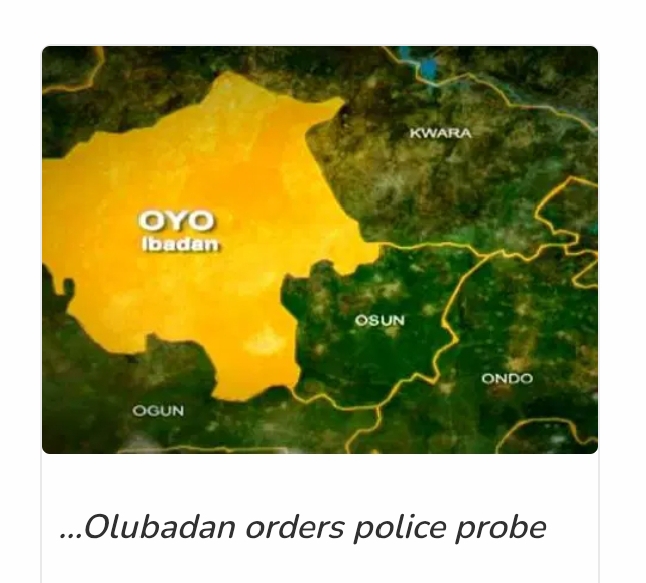
Tension has escalated in Ibadan following the killing of a 47-year-old farmer, allegedly by suspected Fulani herders, in Asa Village, Okelade area of Ido Local Government Area.
The victim, identified as Chief Mutairu Oladosu, who held the title of Otun Balogun of Oluode Okelade, was reportedly attacked while tending to his tomato farm. Eyewitness accounts revealed that the assailants stormed the farm and launched what was described as an unprovoked attack. The farmer, who was with one of his daughters at the time, was said to have been overpowered by the attackers, who were armed with dangerous weapons. Confirming the incident, Oba Wahab Olabamiji, the Okelade Okin, stated that the attack involved three suspected herders. He added that one suspect has been apprehended and handed over to the police for investigation. In response to the incident, the Olubadan has ordered a police probe into the killing. Speaking on the development, Oba Olabamiji said the community leadership visited the palace to brief the monarch on the rising insecurity in the area. According to him, residents have raised concerns over the activities of herders, alleging that beyond grazing on farmlands, they now pose a serious threat to lives and property. The incident has further heightened fears among locals, with calls for urgent security intervention across affected communities in Oyo State.